


Dismantling the Doctrine 2026
INTERNATIONAL SUMMIT
OCTOBER 14 - 18
I
ROTORUA, AOTEAROA
Rejecting Discovery Fictions
Dismantling Domination
Restoring Indigenous Justice
The Gathering
Dismantling the Doctrine 2026 will bring together Indigenous leaders, scholars, activists and rights advocates to examine the history and enduring impacts of the Doctrine of Discovery and Domination. Through shared learnings, wisdom, and experiences, the gathering will explore how the Doctrine shaped global patterns of colonisation, racism, enslavement and dispossession, and how these patterns continue to influence economics, law, policy, and social systems today.
The gathering will help us to more clearly view and articulate the injustices facing our worlds today, consider how they connect, and refine our strategies for solidarity and collective liberation.

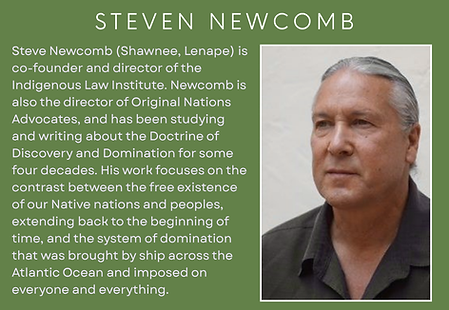
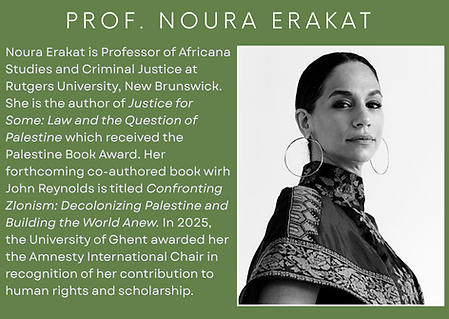
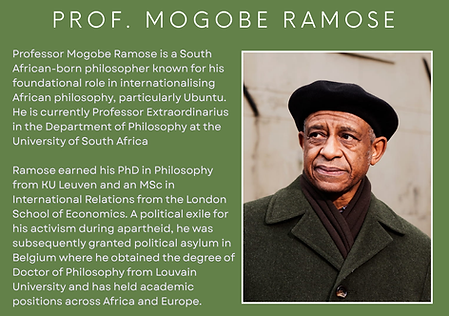
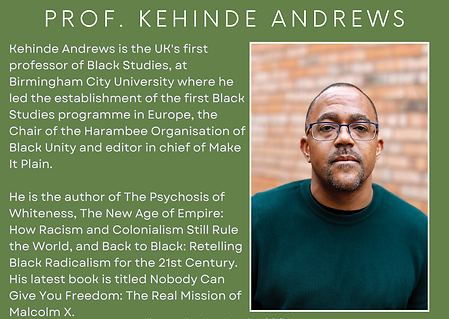
KEYNOTE SPEAKERS

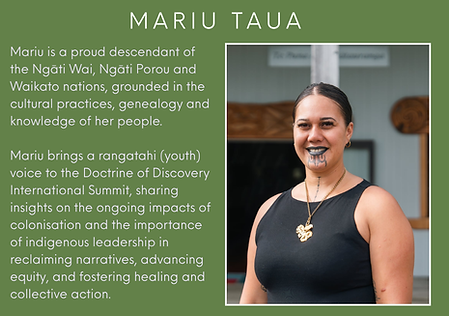


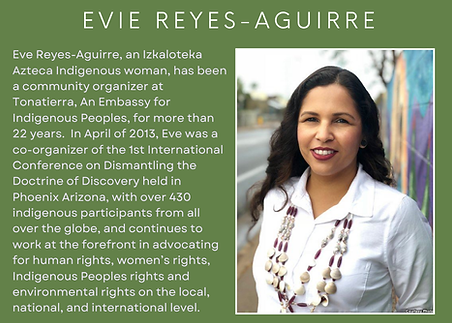
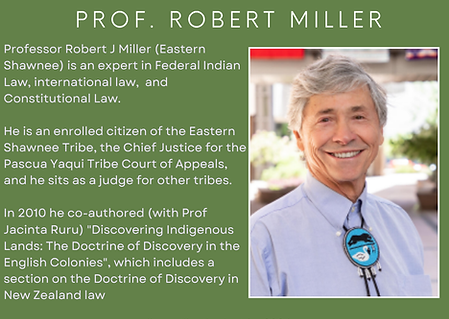


Ō MĀTOU TŪRANGA
OUR POSITIONS AND PRINCIPLES
Our tūranga are our positions and principles. They have informed our exploration of the Doctrine of Discovery and Domination, and anti-racism, for over a decade. They guide our pathway to the gathering, and will guide the gathering itself.
We share this with you so that you can be prepared for the gathering ahead, and so you have the information needed to decide whether this is the right space for you.
TĒNEI TE PŌ, NAU MAI TE AO
Emerging from darkness into light
The Doctrine of Discovery and Domination is not a historical relic, but an enduring framework
that informs our economic, political, legal, and social realities.
Healing requires justice, and justice requires truth. Therefore, our healing journey from this worldwide, enduring crime against humanity requires clarity on colonial harm, so that we can also have clarity on the pathway for Indigenous justice.
The Doctrine of Discovery and Domination is not colonially-centred. It is an unapologetically Indigenous-centred critique of colonial criminality across time. In stripping away the cloaks of colonial benevolence and inevitability, we Indigenise notions of justice, human and Earth rights, in order to illuminate a future of being in right-relationship to all.
HONGIHONGI TE WHEIWHEIĀ
Embrace the unusual
As a part of this journey, you may be called upon to breathe in unusual perspectives.
Consider that even the oppressed can unwittingly be an oppressor. Be open to the idea that you, too, can be a vessel of Doctrine logic.
These discussions will be necessarily uncomfortable at times, but through respectful discourse, inquisitiveness and integrity (aroha, māhirahira, pono) as the grounding for how we engage, our discomfort becomes opportunities for growth.
Our critique is not of each other as individuals, but of systems, assumptions and mindsets that no longer serve us in developing collective strategies for liberation and justice.
WHAKAPAPATIA TE KŌRERO, KEI RANGIRUA TE TANGATA
Ground your words so that you do not lose the person
We honour and respect those upon whose land we meet, their stories and their truths.
We ground our discussions in material realities. This calls upon us to consistently see each other’s humanity.
Our learning journeys can never become a process of intellectualising real harm happening to bodies here or elsewhere. We do not debate or illegitimise genocide. All colonial violence must be acknowledged, and brought to an end.
While we respect diverse perspectives and experiences, we are not here to debate whether the Doctrine is. The Doctrine of Discovery and Domination is a reality, and a discipline, developed and led by Indigenous activists and scholars over generations. For that reason, we gather to learn from each others experiences of it, and collectively strategise its dismantlement.
Ancestor-histories are not abstract lessons. They are stories of real harm, visited upon real people, and are carried in Indigenous bodies today. They are sacred, and deserve respect. We connect our stories in a way that is respectful of each others’ distinctiveness.
As we progress on this journey, we keep our relations who have been most impacted by the Doctrine of Discovery front of mind: the institutionalised, the incarcerated, and the impoverished.
TOITŪ TE TIRITI ME HE WHAKAPŪTANGA
We honour our treaty and declaration as the basis for power and relationships on these lands.
Te Tiriti o Waitangi and He Whakapūtanga o te Rangatiratanga o Nū Tīreni is the constitutional foundation of Aotearoa-New Zealand. We stand for, and recognise all rights that were affirmed by Te Tiriti o Waitangi – that rangatiratanga was never ceded, that our ancestors were complete, not waiting-to-be-completed by colonialism. That we have always held full rights to retain and develop our pre-colonial legal, political, economic, and relational systems as legacies for future generations. This includes our right to forge Indigenous inter-national relationships grounded in our collective opposition to colonial harm and collective commitment to Indigenous justness.
KA MĀ TE ARIKI, KA MĀ TE TAUIRA
All of us have learning to do
We call upon everyone to remain an active learner. Even though you think you may have heard some of these stories before – listen, you may hear something new, this time. Certitude can be a barrier to growth and connection. Through open-ness, and listening to each others’ perspectives in good faith, we grow collectively. The deep entrenchment of the Doctrine of Discovery and Domination means that nobody comes out of this “clean” – we have all absorbed colonial ideas (sometimes as a means of survival) and must all undertake the process of disentanglement, together. We do not weaponise our learnings against others, or assume positions of being “less colonised” or “more Indigenous” because of these learnings. If colonial harm is severance from each other and Earth Mother, our justice journey must be one of respectful relationships.
Ngā rauemi - Resources
Tēnei te pō,
nau mai te ao
Emerging from the darkness into the light
We have collated a series of resources to carry you toward the gathering, so that you may come prepared, and that we can all arrive ready to learn from one another. This page will keep growing as we approach the gathering.
He Timatanga
If you engage with nothing else before we gather, begin with these. They give us a shared starting point.
Start here
"An Introduction to the Doctrine of Discovery" by Tina Ngata and Fu Fighter Arts - bilingual (Te Reo Māori and English), and downloadable for printing
Moana Jackson's 2012 speech to the UN on the Doctrine of Discovery and constitutional justice
The Doctrine of Discovery: some basic facts by the NZ Human Rights Commission
The Doctrine of Discovery by Voices from Parihaka
Ngā Toki Whakarururanga overview of the Doctrine of Discovery and Legal Imperialism, with full paper available here
Common Questions about the Doctrine of Discovery by the Christian church collective "Coalition for Dismantling the Doctrine of Discovery"
Pānui - Read
Mātakitaki - Watch
THIS CLIP from Dr Mahinaarangi Baker discussing the Doctrine of Discovery and its connections to racism, the exploitation of nature and all peoples.
THIS CLIP from Steven Newcomb about the Doctrine of Christian Discovery, it's connection to language and ceremony, and the colonial presumption of sovereignty
THIS CLIP from Haudenosaunee leaders Tadodaho Sil Hill and Chief Oren Lyons speaking on the Doctrine of Discovery as it was applied to their people
THIS CLIP from the Planting Seeds Podcast of Tina Ngata discussing the Doctrine of Discovery
THIS CLIP from the National Native American Boarding School Healing Coalition
Please forward all queries to: events@dismantledoctrine.info
Workshop proposals are now closed
Ticket sales have closed. Please note, that due to our ticketing structure, which is by application, and tiered in order to allow for unfunded attendees, we are unable to accept applications for refunds.
All tickets are non-transferable.
SUPPORTING ORGANISATIONS


